The Unpaid Archivist: What It Really Costs to Love Art This Much
The Person Behind the Perfect Feed
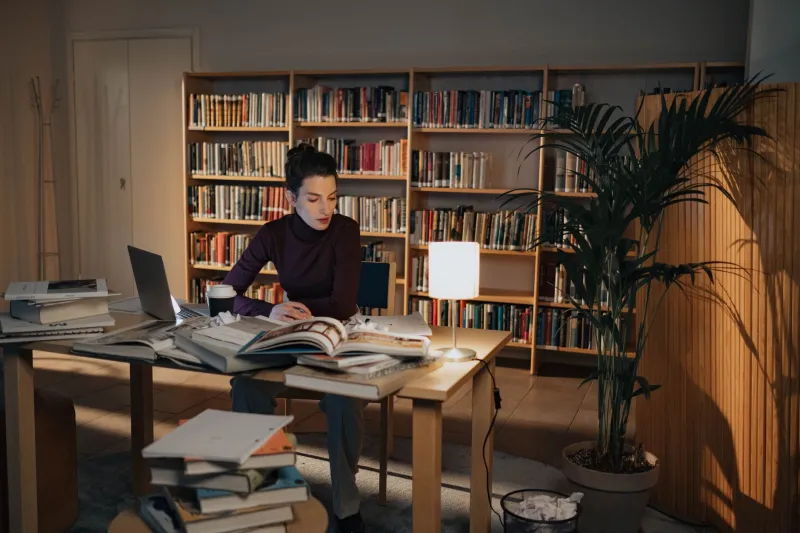
Somewhere right now, someone is up at 1 a.m. tagging a 1970s textile designer whose name almost nobody knows. They're cross-referencing exhibition catalogs, pulling screenshots from out-of-print books, and writing a caption that somehow makes it all feel urgent and alive. Their follower count is decent. Their bank account doesn't reflect that at all.
This is the unpaid archivist. The obsessive curator. The person who decided, without anyone asking them to, that certain artists deserved to be remembered—and then just... started doing the work.
It's one of the stranger phenomena to come out of the internet age. We've built entire platforms around taste, discovery, and curation, and yet the people doing that labor with the most care and depth are almost always doing it for free.
What Curation Actually Looks Like Up Close
Talk to anyone who runs a serious art-focused account or archival blog and the hours are almost always shocking. We're not talking about reposting pretty images and calling it a day. Real curation involves research—deep, time-consuming research. Tracking down original sources. Reaching out to artists directly. Building context around work that's been stripped of it by years of decontextualized reposts.
There's a particular breed of curator who specializes in overlooked corners of design history—mid-century illustrators, regional muralists, Black graphic designers whose contributions got absorbed into mainstream movements without credit. These folks are essentially doing archival scholarship, except without institutional support, without a stipend, and without the title that would make anyone take them seriously at a dinner party.
The emotional investment is real too. When you spend months building an audience around a forgotten artist and then watch a major publication run a piece on that same artist without acknowledging where the renewed interest came from, it stings in a way that's hard to articulate. It's not quite plagiarism. It's more like being invisible in the story you helped write.
The Parasocial Knot
Here's where it gets complicated. The people who follow these curators don't just consume the content—they form genuine attachments to the sensibility behind it. They trust the eye. They feel like they know the person, even if they've never exchanged a single message.
That parasocial bond creates a weird kind of pressure. Audiences start to feel ownership over a curator's taste. They get territorial when the feed shifts, or when the curator starts experimenting with their format. They want the thing they fell in love with, preserved exactly as it was.
And curators, for their part, start to feel responsible for their audience's experience in ways that can quietly become exhausting. Missing a week of posts feels like letting people down. Taking a break feels like abandonment. The passion that started as pure love for the work slowly accumulates the weight of obligation.
This is the emotional labor that doesn't show up on any invoice.
When "Just Do It for the Love" Runs Dry
At some point, the math stops working. Hours in, dollars out, energy depleted. The question of monetization starts to feel less like selling out and more like basic sustainability.
But monetizing curation is its own minefield. The moment you put a Patreon link in your bio, some portion of your audience decides your motives are now suspect. The authenticity that made your taste trustworthy suddenly feels transactional to people who were happy to benefit from your free labor indefinitely.
There's something deeply American about this bind—this cultural mythology that passion should be its own reward, that asking to be paid for creative or intellectual labor somehow cheapens it. We celebrate the hustle but we're weirdly suspicious of the invoice.
Some curators have found ways through it. Newsletters with paid tiers that offer deeper dives. Consulting work for brands that want to tap into niche aesthetics. Licensing their archives to editorial outlets. But these solutions require a level of entrepreneurial energy that isn't evenly distributed, and they often pull the curator further from the pure act of discovery that made the whole thing worth doing.
The Gift That Costs You
There's a concept in anthropology about gift economies—systems where value circulates through generosity rather than transaction. A lot of online curation functions like a gift economy in the best sense: someone shares something beautiful, it spreads, it connects people, it keeps an artist's legacy alive. The return isn't monetary; it's relational and cultural.
But gift economies work when the giving is sustainable. When the giver is also receiving something—community, recognition, creative fulfillment. When those returns start to feel hollow, or when the platform's algorithm buries your work anyway, the gift starts to feel more like a drain.
The curators who seem to last longest are the ones who've made peace with a specific kind of ambiguity. They're not doing it to build a brand, exactly, but they're not pretending the audience doesn't matter either. They've found a way to hold both things—the genuine love for the work and the practical reality of existing in a creator economy—without letting either one fully swallow the other.
Why It Still Matters
For all the structural problems, the work these curators do is genuinely irreplaceable. Museums have acquisition budgets and board politics and a hundred reasons to play it safe. Algorithms reward what's already popular. Mainstream editorial moves toward what's already legible.
The unpaid archivist operates outside all of that. They can go deep on a Lebanese poster designer from the 1960s or a Detroit muralist who never got a solo show. They can build a case for why something matters without needing it to fit a trend cycle or a grant application.
That freedom is rare. And the fact that it's currently subsidized almost entirely by personal passion and unpaid hours is a problem worth sitting with—not just for the curators themselves, but for anyone who's ever discovered something they loved through someone else's obsession.
Somebody did that work. Somebody stayed up late, wrote the caption, tagged the archive, kept the name alive.
They probably didn't get paid. They probably did it anyway.