Steal Like an Artist Actually Meant It: The New Originality Is Built on What Came Before
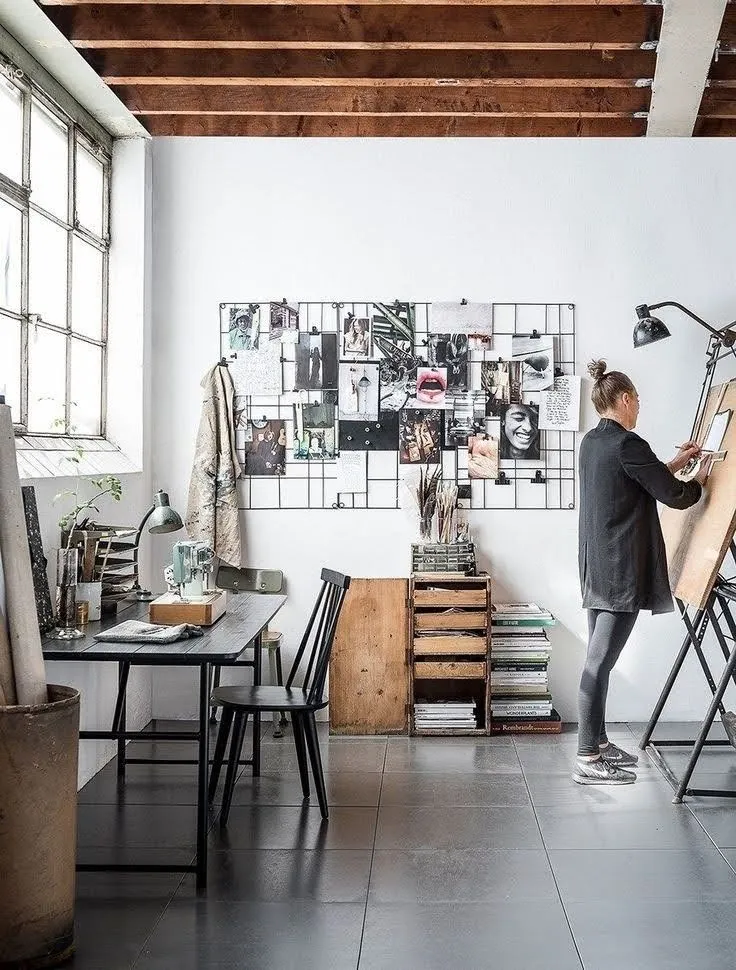
Photo: artist collage studio mixing vintage and modern design elements creative workspace, via i.pinimg.com
There's a version of creativity that gets taught in schools and celebrated in TED Talks — the lone genius, the blank canvas, the thunderbolt idea that arrives fully formed from nowhere. It's a romantic story. It's also, increasingly, being called out as fiction.
A growing wave of creators across music, visual art, and design are making work that doesn't pretend to exist in a vacuum. They're sampling, referencing, collaging, and iterating — not because they can't think for themselves, but because they've decided that dialogue is more interesting than monologue. And honestly? The work is proving them right.
The Myth of the Original Idea
Here's the uncomfortable truth that art school glosses over: almost nothing is truly original. The Beatles were obsessed with Chuck Berry. Andy Warhol lifted commercial imagery and called it fine art. Tarantino has built an entire career on loving movies so loudly that the love becomes its own artistic statement. Even Shakespeare borrowed plots.
What's shifting now isn't the behavior — humans have always built on what came before. What's shifting is the attitude toward it. For a long time, the cultural pressure was to hide your influences, to sand off the fingerprints of your inspiration so the final product looked like it came from the ether. Today, a younger generation of creators is doing the opposite: they're putting the fingerprints front and center.
"I don't want to pretend I made something out of nothing," says Dani Reyes, a Los Angeles-based graphic designer whose work blends 1970s protest poster aesthetics with contemporary digital typography. "Everything I make is in conversation with something. Hiding that feels dishonest — and honestly, kind of boring."
Sampling as Scholarship
In music, the conversation around sampling has always been complicated by copyright law, but culturally, hip-hop proved decades ago that a well-placed sample isn't laziness — it's archaeology. Producers like J Dilla and Madlib turned crate-digging into a form of criticism, choosing sounds that recontextualized the original material while creating something entirely new.
That sensibility has now spread far beyond hip-hop. Bedroom producers on SoundCloud and Bandcamp are chopping up everything from obscure Soviet film scores to forgotten 80s R&B, treating the act of selection and transformation as the creative work itself. The question isn't did you make this from scratch — it's what did you hear in it that nobody else did, and what did you do with that hearing?
That's a fundamentally different measure of originality. And it's one that rewards deep cultural knowledge, careful listening, and curatorial instinct — skills that the blank-canvas model doesn't even account for.
Visual Art's Collage Comeback
In the visual world, collage — one of the oldest remix traditions — is having a serious moment. Artists working digitally and physically are pulling from advertising archives, film stills, botanical illustrations, and vernacular photography to build images that feel simultaneously nostalgic and completely current.
The effect isn't accidental. When Brooklyn-based artist Marcus Teel layers a 1950s housewife advertisement over a satellite image of a wildfire, the collision of those two found images creates a meaning that neither could produce alone. "I'm not making commentary in spite of the source material," he explains. "The source material is the commentary. I'm just the one who put them next to each other."
This is the remix as argument — using existing cultural artifacts to say something new about the world they came from.
Design's Relationship With Reference
In commercial and graphic design, the conversation is slightly different but no less interesting. There's been a visible wave of designers leaning hard into historical aesthetics — brutalist typography, Swiss grid systems, Soviet constructivist layouts — but applying them to thoroughly modern contexts. A tech startup's brand identity built on 1930s propaganda poster geometry. A streetwear drop packaged in a visual language borrowed from 1970s government pamphlets.
Critics sometimes call this nostalgia. But the designers doing it tend to push back on that label. "Nostalgia implies longing for the past," says Portland-based art director Keisha Fontaine. "I'm not longing for anything. I'm borrowing a visual vocabulary because it communicates something specific — authority, urgency, handmade-ness — that I can't get from contemporary design conventions. It's a tool, not a vibe."
That distinction matters. There's a difference between dressing up in the past because it looks cool and actively interrogating the past by dragging its visual language into a new context where it means something different.
Where Copyright Meets Culture
Of course, none of this happens in a legal vacuum. The question of who owns a style, a sample, or a reference is genuinely contested terrain — and the answers often depend more on who has money for lawyers than on any coherent creative principle.
The 2015 "Blurred Lines" verdict sent shockwaves through the music industry precisely because it seemed to suggest that you could own a feel, a general sonic vibe, not just a specific melody. That ruling made a lot of producers nervous and arguably pushed some toward safer, blander choices.
But the creative culture has largely moved in the opposite direction. Rather than retreating from reference, many artists have responded by being even more explicit about their influences — treating transparency as both an ethical stance and a kind of legal protection. If you're openly in conversation with a source rather than pretending it doesn't exist, the argument goes, you're transforming rather than copying.
The Conversation Is the Work
What ties all of this together — the producers, the collage artists, the designers raiding the archive — is a shared belief that creativity doesn't happen in isolation. It happens in response. Every piece of work is a reply to something else, whether you acknowledge it or not.
The creators leading the Remix Renaissance have simply decided to acknowledge it. They're making the conversation visible, treating the act of reference and recontextualization as a legitimate creative move rather than a shortfall to be hidden.
And in doing so, they're asking us to update our definition of originality. Not the ability to conjure from nothing — but the ability to see something in what already exists that nobody else has seen, and to do something with that vision that changes how the rest of us see it too.
That's not imitation. That's a whole different kind of art.