Two Heads, One Vision: What Really Happens When Creators Stop Working Alone
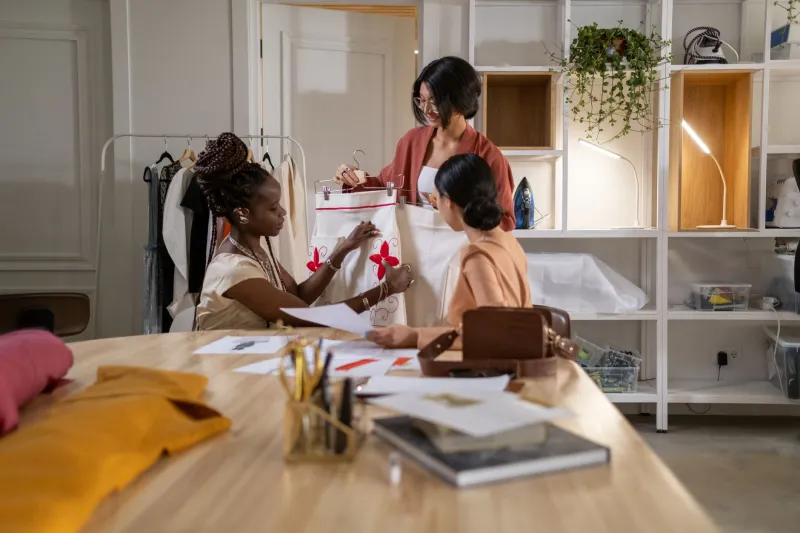
There's a specific kind of dread that shows up the moment you realize your collaborator is taking the project somewhere you never planned to go. Your stomach drops. Your instinct is to pull back, reassert control, remind everyone whose idea this was in the first place. And then — if you're lucky, if you're brave enough to sit with the discomfort — something unexpected happens. The work becomes better than you.
Collaboration is one of those words that gets thrown around like it's simple. Two creatives, one project, magic. But anyone who's actually done it knows the truth: sharing creative ownership is one of the hardest things you can ask of a person who makes things for a living. It asks you to trust someone else's instincts as much as your own. Sometimes more.
The Myth of the Solo Genius
American creative culture has a long love affair with the lone visionary. The tortured painter in a loft. The director who controls every frame. The designer who builds an entire aesthetic universe from scratch. We celebrate these figures because they fit a clean narrative — one person, one vision, one legacy.
But look closer at almost any creative legacy and you'll find the cracks in that story. Lennon needed McCartney. Jordan needed Pippen. Even Steve Jobs — the patron saint of singular vision — was inseparable from Jony Ive's eye for design. The myth persists not because it's true, but because it's easier to sell.
What actually produces the most interesting work is usually a collision. Two sensibilities rubbing against each other until something sparks that neither person could have generated alone.
When the Work Stops Being Yours
Here's where it gets philosophically thorny. If your collaborator fundamentally reshapes the direction of a project — changes the color palette, rewrites the emotional core, flips the narrative structure — is it still your work? Does it matter?
This tension shows up constantly in design and film. Consider how often credited directors describe the editing room as the place where the movie they intended to make gives way to the movie that needed to exist. That transformation rarely happens alone. It happens in argument, in compromise, in the weird creative alchemy that two opinionated people generate when they're both too invested to back down.
Graphic designer Paula Scher has talked openly about how her most iconic work often came out of constraint and collaboration — client pushback, team friction, the pressure of someone else's standards forcing her own thinking into sharper focus. The tension wasn't the enemy of the work. It was the work.
Surrender as a Creative Strategy
There's a counterintuitive truth buried inside every successful creative partnership: at some point, you have to let go. Not abandon your standards. Not compromise your values. But genuinely release the grip on the outcome being exactly what you imagined.
Filmmakers like the Coen Brothers have built entire careers on a model of shared authorship so complete that they essentially function as a single creative unit — one writes while the other directs, they edit together, and neither claims the idea as solely theirs. The result is a body of work that feels unlike anything either of them might have produced independently. That's not a coincidence.
The same principle plays out in design studios, music production, and collaborative art practices across the country. When Brooklyn-based creative collectives started producing visual work that blurred the line between individual contributor and group output, critics initially struggled to categorize it. Who do you credit? Who's the artist? The answer, increasingly, is that the question misses the point.
The Friction That Makes It Real
Not every collaboration ends in a masterpiece. Plenty of them end in a Google Doc full of passive-aggressive comments and a friendship that's slightly less warm than it used to be. The difference between partnerships that produce something great and ones that collapse usually comes down to a single factor: how each person handles the moment when the other person's idea is genuinely better.
That moment always comes. If you're collaborating with someone who has real vision and real stakes in the project, there will be a point where they see something you don't. Where their instinct is sharper, their reference deeper, their solution more elegant than yours. What you do in that moment defines whether the collaboration produces something worth making.
The ego move is to redirect, dilute, or quietly undermine the idea until it looks more like yours. The creative move — the harder, more honest move — is to say yes, that's it and mean it.
Protecting What's Non-Negotiable
None of this means you walk into a collaboration without a spine. Surrendering control isn't the same as having no convictions. The best creative partnerships are built on a shared understanding of what's actually non-negotiable for each person — and a mutual respect for those lines.
A designer might be completely flexible on color and composition but immovable on typography. A filmmaker might welcome input on pacing but hold firm on the emotional tone of a final scene. Knowing your own non-negotiables before the collaboration begins is what separates productive creative tension from the kind that just burns everything down.
The conversation that happens before the project starts — the one where you actually say this is what I can't compromise on — is often the most important creative conversation of the whole process. It's also the one most people skip because it feels awkward or overly formal. Don't skip it.
What You Get That You Can't Get Alone
After all the friction, the ego checks, the uncomfortable moments of letting someone else's vision steer — what do you actually get out of collaboration that you couldn't generate solo?
Honestly? Surprise. And surprise is one of the rarest, most valuable things in creative work.
When you work alone, you're always working within the limits of your own imagination. Your blind spots stay blind. Your habits stay comfortable. Your aesthetic keeps circling back to the same wells because those are the ones you know. A collaborator — especially one who comes from a different background, a different reference pool, a different way of seeing — is a direct line into territory you'd never find on your own.
The work that comes out of real creative partnership tends to have a quality that's hard to name but easy to feel. A kind of aliveness. An unpredictability. It moves in directions that feel both surprising and inevitable — which is maybe the best thing you can say about any piece of creative work.
Two heads, one vision. It's not a compromise. It's an upgrade.