Less Is the Loudest Thing in the Room: How Creators Are Winning With Nothing
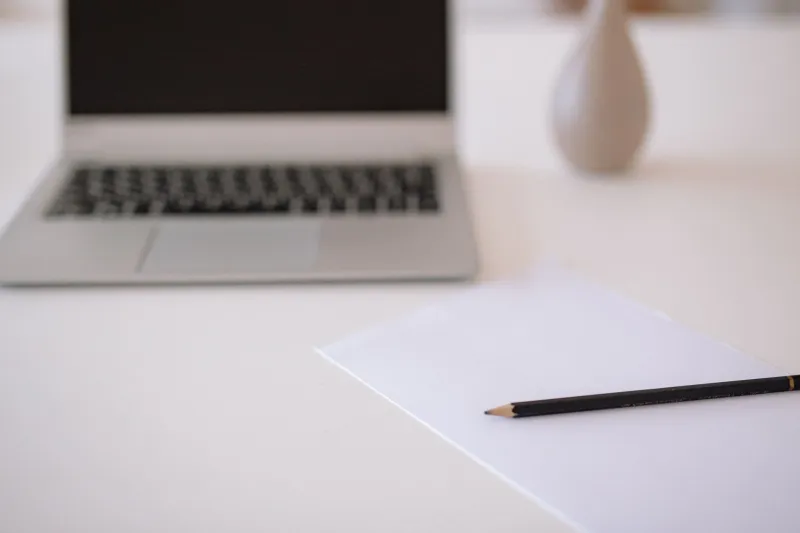
There's a weird thing that happens when you scroll through your feed long enough. Everything starts to blur together. The gradients, the motion graphics, the layered textures and drop shadows — it all becomes one long, exhausting smear of try. And then, right in the middle of it, something completely bare stops you cold. No frills. No decoration. Just the thing itself, staring back at you.
That's not an accident. That's a choice. And right now, it might be the most powerful creative decision a person can make.
The Backlash Nobody Predicted
For years, the assumption was that more was better. More color, more detail, more visual information signaled effort — and effort signaled quality. Maximalism had a real moment. Loud typography, chaotic collage aesthetics, hyperpop visuals. It was exciting, genuinely. But like anything pushed to its limit, it started to feel like a room where everyone is shouting.
What nobody really predicted was the backlash coming from inside the creative community itself. Designers, photographers, musicians, and directors quietly started pulling back. Not because they couldn't do the flashy stuff — but because they realized the flashy stuff had stopped meaning anything.
The result is what some people are calling a new brutalism in creative work. Not the harsh concrete-and-steel brutalism of midcentury architecture, exactly — but something spiritually related. A commitment to rawness. To showing the structure without dressing it up. To trusting that the thing you made is enough without the costume.
Constraint as a Creative Weapon
Here's the part that surprises people: working with less is harder. It sounds like laziness from the outside. One font, two colors, negative space everywhere — how long could that take? But ask any designer who's tried to make a single word carry a whole concept, and they'll tell you. Reduction is brutal work.
When you strip away the ornamentation, every decision left standing has to pull serious weight. The kerning matters. The silence in the track matters. The empty white space on the page isn't empty — it's doing something. This is the paradox that creators are starting to lean into: the less you include, the more everything you do include has to mean.
Graphic designers working in brand identity have been living this truth for a while. Think about the logos that have stuck around the longest. They're not complicated. They work in one color, at any size, on any background. The constraint isn't a limitation — it's the whole point.
Visual Artists and the Power of the Unfinished-Looking Thing
In fine art and illustration circles, there's been a real shift toward work that reads as deliberately spare. Not polished to the point of sterility, but stripped to something essential. Artists posting to Instagram and Behance are getting more traction with studies and sketches — raw linework, minimal fills, compositions that breathe — than with their most technically complex pieces.
Why? Part of it is the feed itself. When your work has room to breathe, it doesn't get lost in the scroll the way a busy, detailed image does. The eye needs somewhere to land. White space gives it that. A composition built on what's missing creates tension, and tension keeps people looking.
There's also something more personal happening. Audiences can feel when a creator is hiding behind technique. When the work is stripped back, there's nowhere to hide. The vulnerability of that — the creator saying this is the thing, just the thing — builds a different kind of trust.
Music That Knows When to Shut Up
This shift isn't just visual. In music production, a similar instinct is reshaping what gets attention. The hyper-produced, wall-of-sound approach that dominated for so long is getting countered by tracks that leave room. Sparse arrangements. Audible breath. Silence used as punctuation.
Producers who've grown up listening to everything — who can do the maximalist thing — are making deliberate choices to pull back. One synth line instead of twelve. A drum pattern with space in it. Vocals left dry instead of soaked in reverb. The effect is intimate in a way that big, lush production often isn't. You feel like you're in the room with someone.
And that intimacy translates directly to listener loyalty. People don't just stream those tracks — they keep them. They come back. There's something to return to, because the work didn't hand you everything at once.
The Filmmaker's Empty Frame
In film and video, the same logic applies. Directors who choose stillness over constant motion — who let a shot hold, who trust silence over score — are making work that feels different from everything else on the platform. It's not slow for slow's sake. It's confident. It says: I know what's in this frame, and I know you'll see it if I give you time.
Independent filmmakers and short-form video creators are increasingly experimenting with this. Fewer cuts. Wider shots that don't rush to explain themselves. Dialogue that doesn't over-explain. The viewer has to participate, has to bring something to the table — and that participation creates investment.
It's the opposite of the anxiety-driven editing style that treats the audience like they'll leave if you don't give them something new every two seconds. Trusting your viewer enough to slow down is, weirdly, a form of respect. And audiences can feel the difference.
Why This Moment Is Different
Minimalism as an aesthetic isn't new. But what's happening right now feels less like a style choice and more like a philosophical one. Creators are reacting to a specific cultural exhaustion — the overstimulation of the feed, the relentlessness of content, the pressure to always be doing more.
Choosing reduction in that context isn't just an aesthetic preference. It's a statement. It says something about what the creator believes attention is worth, what they think the audience deserves, and what they're willing to trust.
The creators who are doing this well aren't minimalists because they ran out of ideas. They're minimalists because they had an idea clear enough to survive without decoration.
The Real Flex Is Knowing What to Cut
Anybody can add. That's the easy part — throw another element in, another layer, another effect. The hard thing, the skilled thing, is knowing exactly what to take away.
The brutalist's advantage isn't austerity for its own sake. It's the discipline to figure out what your work is actually about — and then to trust that enough to let it stand alone. In a landscape where everyone is shouting over each other, the creator who speaks quietly and clearly is the one you remember.
That's not a retreat. That's a flex. Probably the realest one going right now.