The Beauty of the Abandoned: Why Creators Are Putting Their Failures on Display
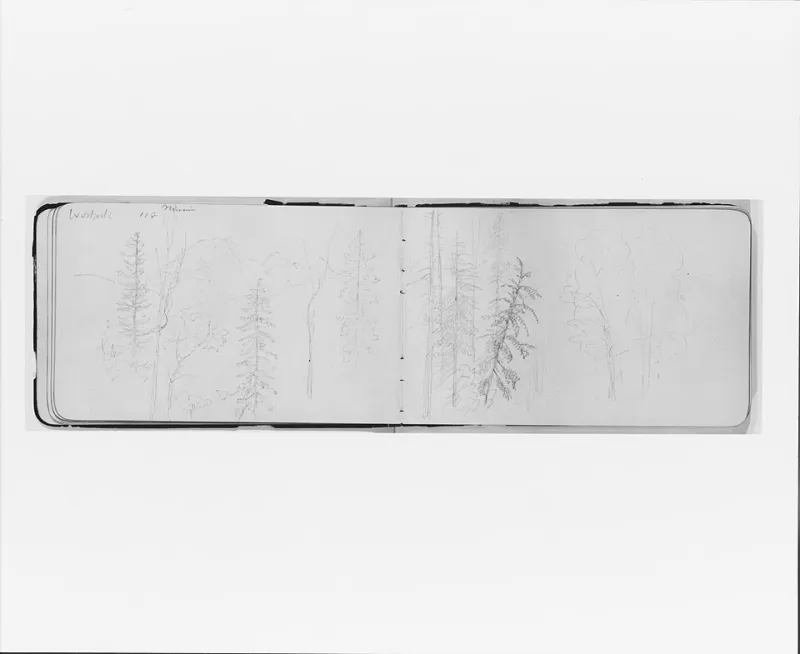
Photo: Albert Bierstadt, CC0, via Wikimedia Commons
Somewhere in a folder on a filmmaker's hard drive, there are seventeen minutes of footage from a short film that never got made. The lighting was wrong, the lead actor had a scheduling conflict, the concept shifted mid-shoot, and the whole thing just... stopped. For years, that footage sat there. Then she uploaded it to Vimeo with a simple title: Abandoned, 2021.
It got more views than anything she'd finished.
This is happening all over the place right now. Artists, designers, writers, and filmmakers are pulling out their abandoned projects — the sketches that went nowhere, the rejected brand concepts, the half-written scripts — and putting them in front of audiences. Not as cautionary tales. Not as jokes. As actual work.
And people cannot get enough of it.
The Cult of the Unfinished
There's a long art-historical tradition of valuing the incomplete. Michelangelo's Prisoners — sculptures that appear to be struggling out of the marble — are among his most studied works, and they were never finished. Schubert's Unfinished Symphony is more famous than several of his completed ones. Kafka asked for his manuscripts to be destroyed. We kept them anyway, and we've been grateful ever since.
The unfinished work has always carried something the polished final version can't: the trace of the hand, the evidence of thought mid-process, the ghost of what the thing was trying to become.
What's new is that creators aren't waiting for posterity to rescue their abandoned work. They're releasing it themselves, on their own terms, while they're still alive to explain it — or to deliberately not explain it.
The Business of the Behind-the-Scenes
Let's be real: there's also a financial dimension here, and it's worth talking about without being cynical about it.
Patreon, Substack, and similar platforms have created a market for creative process content. Subscribers pay monthly to get access to the stuff that doesn't make the main feed — the drafts, the dead ends, the 'here's the version we scrapped.' For a lot of independent creators, this behind-the-scenes tier is a meaningful chunk of their income.
What's interesting is what this has done to the definition of the 'product.' A rejected logo concept, in isolation, is just a file in a folder. Packaged as part of a designer's creative process — here's what I tried, here's why it didn't work, here's what I learned — it becomes something people genuinely want to pay for.
The failure becomes the content. The abandoned project becomes the deliverable.
That's not a bad thing. It's actually a pretty elegant solution to the brutal economics of creative work. If you've spent forty hours on something that the client rejected or that you decided wasn't good enough, the ability to turn those forty hours into something shareable isn't a consolation prize. It's a legitimate second life for the work.
What Audiences Are Actually Looking For
Ask anyone who follows a creator's 'process content' why they're into it, and you'll hear some version of the same answer: it makes the finished work feel more real.
When you see the fifteen thumbnails a designer tried before landing on the right one, the final version hits differently. When a filmmaker shares the scene she cut because it slowed everything down, you understand the pacing of what remained. The abandoned material becomes a kind of annotation — it gives context that makes the successful work richer.
But there's something else going on too, something a little more personal. Watching a creator fail, restart, abandon, and try again is genuinely reassuring for anyone who makes things. It normalizes the non-linear reality of creative work in a way that finished portfolios never can.
A gallery of polished final pieces says: this is what success looks like. A folder of abandoned sketches says: this is what the road to success actually looks like. For a lot of people — especially younger creators still figuring out their process — the second thing is infinitely more useful.
When the Failure Becomes the Point
Some creators have taken this further, moving past 'sharing process' into something that feels more deliberately artistic. They're not just releasing their failures as supplementary material — they're framing the failure itself as the work.
There are short film directors who have released 'director's graveyards' — compilations of scenes, concepts, and entire projects that didn't make it, presented as standalone pieces. Some graphic novelists have published 'the book I couldn't write' as a kind of anti-memoir: fragments, false starts, and abandoned chapters that trace the shape of a story that never existed.
This is where it gets genuinely interesting from an artistic standpoint. Because when you present failure as the subject rather than the backstory, you're asking the audience to engage with incompleteness on its own terms. You're not saying 'here's the mess before the masterpiece.' You're saying 'here's the mess, and the mess is enough.'
That's a real artistic statement. It pushes back against the idea that creative work only has value when it's resolved — when the problem is solved, the story is ended, the design is finalized. It argues that the attempt, even the failed attempt, contains something worth preserving.
Perfectionism Doesn't Stand a Chance Here
Maybe the most quietly radical thing about this whole movement is what it does to perfectionism.
Perfectionism in creative work is often framed as a virtue — a commitment to quality, a refusal to settle. But it also functions as a kind of paralysis. The fear that the work isn't good enough yet keeps a lot of things from ever being made, or shared, or finished.
Watching creators you respect publish their abandoned work — and watching audiences respond to it with genuine enthusiasm — makes perfectionism harder to justify. If the unfinished thing has value, if the failed attempt is worth something, then the standard for 'ready' shifts. Not down, necessarily. Just wider.
The abandoned project in the folder starts to look less like evidence of failure and more like raw material. Something that didn't work as what it was supposed to be might work as something else entirely — documentation, inspiration, a conversation starter, a piece of process art with its own audience.
Nothing creative has to stay abandoned forever. And sometimes the most interesting thing a creator can do is let people see exactly where they stopped.