Copy, Paste, Resist: When Fan Art Stopped Being a Hobby and Started Being a Statement
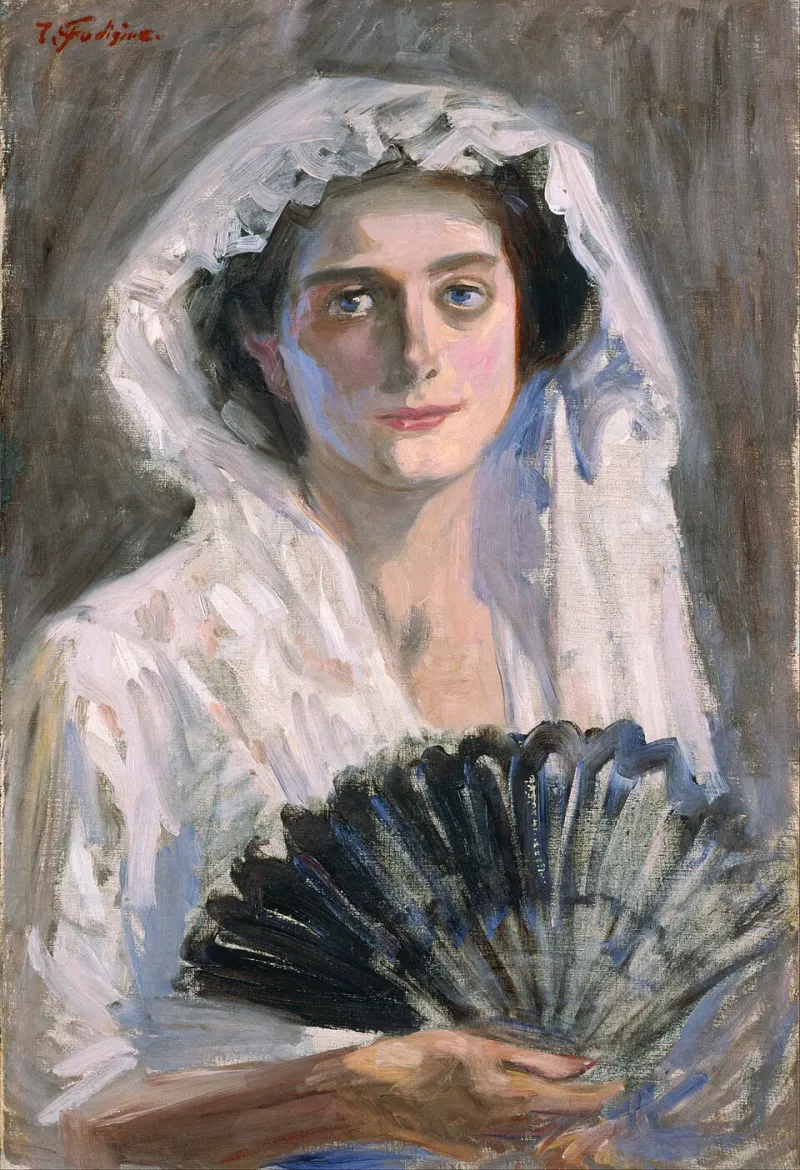
Photo: Fujishima Takeji, Public domain, via Wikimedia Commons
Let's start with a scene. A teenage girl in Ohio, using free software on a laptop that's held together by a sticker, takes footage from a major studio blockbuster and rebuilds it. She swaps the protagonist's face for one that looks more like her own. She recuts the love story so the two women in the background become the leads. She scores it with a track nobody in a boardroom approved. Then she posts it.
By morning, it has 300,000 views.
That's not piracy. That's not copyright infringement in any spirit that matters. That's a person taking the dominant culture's storytelling machinery and running it through her own imagination — and finding out that a lot of other people had been waiting for exactly that version of the story.
From Devotion to Disruption
Fan art has always been an act of love. You make it because you can't stop thinking about a character, a world, a story. You make it because the original left something out that you needed to be there. That impulse is ancient — it predates the internet, predates copyright law, predates the concept of intellectual property entirely.
But something has shifted in the last few years. The tools got better and cheaper. The platforms got bigger. And the cultural stakes got higher.
Fan communities that once operated in the quiet corners of Tumblr or AO3 are now producing work that circulates widely enough to influence the actual properties they're responding to. Showrunners read the fan theories. Studios monitor the edits. And occasionally — more than occasionally — the fan version of a story says something the official version either couldn't or wouldn't.
That's when fan art stops being devotion and starts being commentary.
The Politics Hiding Inside the Edit
Consider what's been happening on TikTok over the last few years with fandom video edits. On the surface, these are just clips — beautiful, obsessively crafted tributes to fictional characters set to music that slaps harder than anything playing at the school dance. But look closer at which characters get centered, how they're framed, what the music choices are saying, and you start to see an argument being made.
Black characters who were sidelined in their source material get elevated to protagonist status. Queer relationships that the original text kept coded or deniable get made explicit. Women who existed primarily to serve male narrative arcs get reedited into their own stories. These aren't accidental creative choices. They're corrections.
In some communities, this is called "fixing" canon. And the language is telling. It implies that the original was broken — that it failed its audience in some specific, nameable way — and that the audience is entitled to repair it.
That's a genuinely radical position dressed up in the aesthetics of fandom.
AI Enters the Conversation (And Complicates Everything)
The emergence of AI image and video generation tools has thrown a grenade into this already complex conversation. Now a fan doesn't need years of technical skill to reimagine a character's race, gender, or story context. They can do it in minutes.
The results have been predictably messy. Some AI-assisted fan work has produced genuinely striking commentary — reimaginings that highlight casting homogeneity in Hollywood, or that visualize marginalized narratives with a vividness that hand-drawn work couldn't achieve as quickly. Others have raised legitimate concerns about likeness rights, about the ethics of generating images of real performers, about what it means when the barrier to creating convincing alternate realities drops to nearly zero.
The creative ownership question gets even thornier here. If a fan uses an AI model trained on copyrighted images to reimagine a copyrighted character — who made what? Who owns what? And more pressingly: does any of that legal framing actually capture what's happening culturally?
Is This a Movement or a Moment?
Every few years, someone declares that fan culture has finally crossed over into legitimate art. And every few years, the art world sort of shrugs and goes back to gallery openings. But there are real signs that this time something structural is different.
Academic programs in the US are beginning to take fan creativity seriously as a subject of study. Artists with gallery careers are openly citing fanfic and fan edits as influences. Legal scholars are rethinking fair use doctrine in light of transformative fan work's cultural function. And some of the most interesting conversations happening in American cultural criticism right now are happening in comment sections under fan-made videos.
The question of whether this constitutes a "movement" might be the wrong frame entirely. Movements have manifestos and leaders and names. What fan communities have is something more diffuse and arguably more durable — a shared set of practices, values, and grievances that don't need a press release to keep propagating.
Who Owns the Story, Anyway?
The legal answer is clear: studios own their IP. But the cultural answer is murkier and more interesting. Stories that generate the kind of devotion that fan communities represent have, in some real sense, escaped their owners. They live in the imaginations of audiences who have made them part of their own identities — and those audiences are going to keep making things, regardless of what the terms of service say.
The most honest take might be that we're watching two legitimate claims about storytelling exist in tension. The creators and studios have real rights. The audiences have real relationships with the material. Neither cancels the other out.
What fan art — at its most thoughtful, its most politically charged, its most technically accomplished — keeps insisting is that the story doesn't end when the credits roll. It keeps going, in the hands of people who needed it to go somewhere the original never took it.
That's not erosion. That's culture doing exactly what culture does.